
How Do You Create Cohesive Design Across Multiple Living Spaces?
Creating cohesive design across multiple living spaces starts with establishing a consistent design vision that carries throughout the home. Rather than making every room identical, cohesive design uses complementary colors, materials, architectural details, and proportions to create a natural flow while allowing each space to have its own personality. The result is a home that feels balanced, timeless, and intentionally designed.
Building a custom home is about more than selecting beautiful finishes. It’s about creating an environment where every room feels connected, functional, and uniquely yours. At J. Lambert Custom Homes, we work closely with homeowners throughout every stage of the design process, helping them make thoughtful decisions that result in elegant homes with lasting appeal. From the initial floor plan to the final lighting fixture, our team focuses on creating luxury homes that reflect each family’s lifestyle while maintaining visual harmony throughout the entire residence.
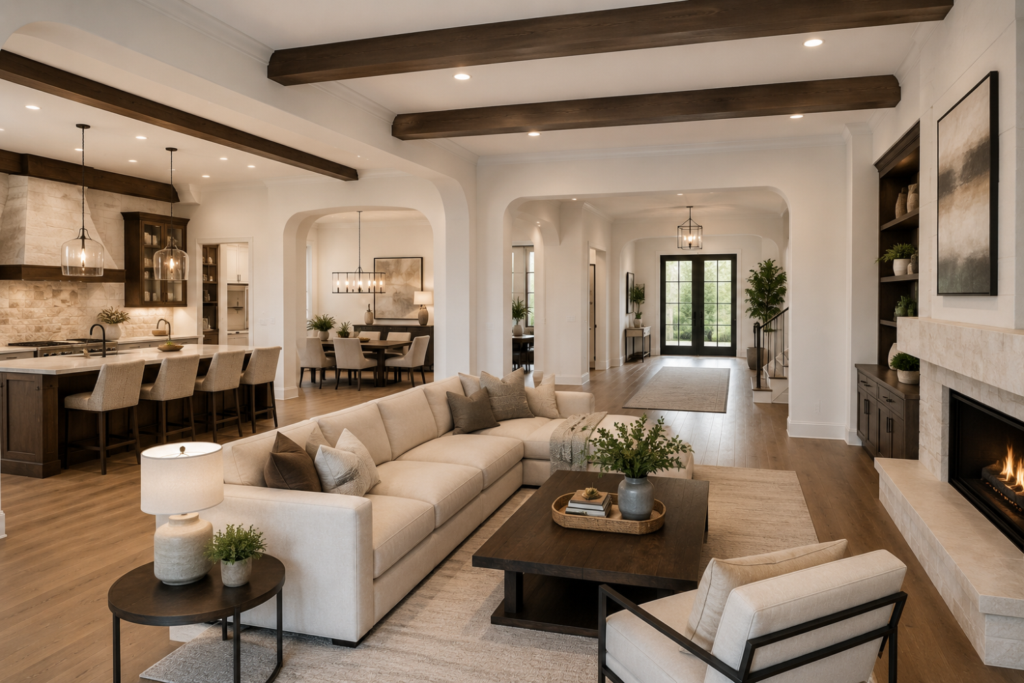
Designing a Custom Home That Feels Connected From Room to Room
Why is cohesive design important in a custom home?
A cohesive design makes your home feel larger, more comfortable, and more luxurious because every space transitions naturally into the next.
When each room follows a completely different style, the home can feel disjointed. A cohesive approach creates visual continuity while allowing each room to serve its own purpose.
Benefits of cohesive home design include:
- Better flow between living spaces
- Timeless style that ages well
- Increased perceived home value
- Easier decorating over time
- A more relaxing and welcoming atmosphere
According to the National Association of Home Builders (NAHB), homeowners continue to prioritize open floor plans and connected living spaces, making cohesive interior design more important than ever.
How do you make different rooms feel connected without making them identical?
The key is consistency, not repetition.
Every room should share common design elements while introducing subtle variations that reflect its function. Think of the home as telling one story with several chapters rather than several unrelated stories.
Some of the easiest ways to create continuity include:
- Repeat flooring materials throughout main living areas.
- Use a coordinated color palette with complementary accent colors.
- Carry similar trim profiles and molding details from room to room.
- Choose consistent cabinet styles, even when finishes vary slightly.
- Repeat metal finishes for hardware and plumbing fixtures.
- Maintain similar ceiling heights and architectural proportions whenever possible.
This approach gives each room its own identity while preserving the home’s overall character.
What design elements have the biggest impact on visual flow?
Certain features naturally draw the eye throughout a home and have the greatest influence on cohesive design.
These include:
Flooring
Consistent flooring is one of the most effective ways to visually connect multiple living spaces. Wide-plank hardwood flooring remains one of the most requested features in luxury custom homes because it creates uninterrupted flow throughout the main level.
Color Palette
Choose two or three primary colors and build each room around them. Accent colors can change, but the foundational palette should remain consistent.
Architectural Details
Features such as ceiling beams, interior doors, trim work, built-in shelving, fireplaces, and window styles should complement one another throughout the home.
Lighting
Lighting fixtures do not need to match exactly, but they should share a common design style. Modern fixtures pair well with other modern elements, while transitional or traditional homes benefit from lighting collections with similar finishes and proportions.
How do open-concept homes benefit from cohesive design?
Open floor plans require even greater attention to design consistency because multiple spaces are visible at the same time.
The kitchen, dining room, and living room often function as one continuous environment. Using coordinated cabinetry, countertops, flooring, lighting, and furniture layouts helps these spaces feel unified while still serving different purposes.
For example:
- The kitchen island may become the visual centerpiece.
- The fireplace can anchor the living room.
- Lighting fixtures help define each functional area without disrupting continuity.
According to the American Institute of Architects (AIA), homeowners continue to favor flexible, open living spaces that support entertaining, remote work, and family gatherings. Cohesive design helps maximize these layouts by creating visual order rather than clutter.
How does working with a custom home builder simplify the design process?
An experienced custom home builder helps homeowners make coordinated design decisions from the very beginning.
Rather than selecting finishes one room at a time, your builder and design team develop a comprehensive design plan before construction begins. This allows every selection to support the home’s overall vision.
At J. Lambert Custom Homes, we guide homeowners through every major design decision, including:
- Exterior architectural style
- Floor plan layout
- Cabinetry selections
- Flooring materials
- Countertops
- Lighting packages
- Paint colors
- Interior trim
- Built-in features
By considering the entire home as one complete project, we help clients avoid costly changes and ensure every room contributes to a unified final result.
Frequently Asked Questions
Does every room need to use the same paint color?
No. Cohesive design relies on complementary colors rather than identical ones. A coordinated palette creates variety while maintaining visual harmony throughout the home.
Can I mix modern and traditional design styles?
Yes. Transitional design successfully blends modern and traditional elements when materials, colors, and architectural details remain consistent.
What is the biggest mistake homeowners make when designing a custom home?
One of the most common mistakes is selecting finishes independently without considering how they relate to adjacent spaces. Viewing the home as one complete design creates a much stronger final result.
Is cohesive design still important in large luxury homes?
Absolutely. In larger homes, cohesive design becomes even more valuable because it helps maintain visual continuity across expansive floor plans while allowing individual rooms to feel intentional and inviting.
Create a Home That Feels Beautiful From Every Angle
Exceptional custom homes are not defined by individual rooms. They are defined by how every space works together to create one cohesive living experience. Through thoughtful planning, consistent design elements, and expert craftsmanship, your home can feel elegant, functional, and timeless for years to come.
If you’re ready to build a custom home designed with harmony, beauty, and lasting value in mind, J. Lambert Custom Homes is here to help. Contact us today to schedule a consultation and begin designing a home that flows seamlessly from room to room.